Prices · Nov. 24, 2026 · 6 min
Amazon's Shipping Bill: $102.7 Billion in One Year
Published Nov. 24, 2026
The short answer
- In 2002 Amazon moved its free Super Saver Shipping minimum from $99 to $49 in June and to $25 in August. Its press releases call the $49 step a test.12
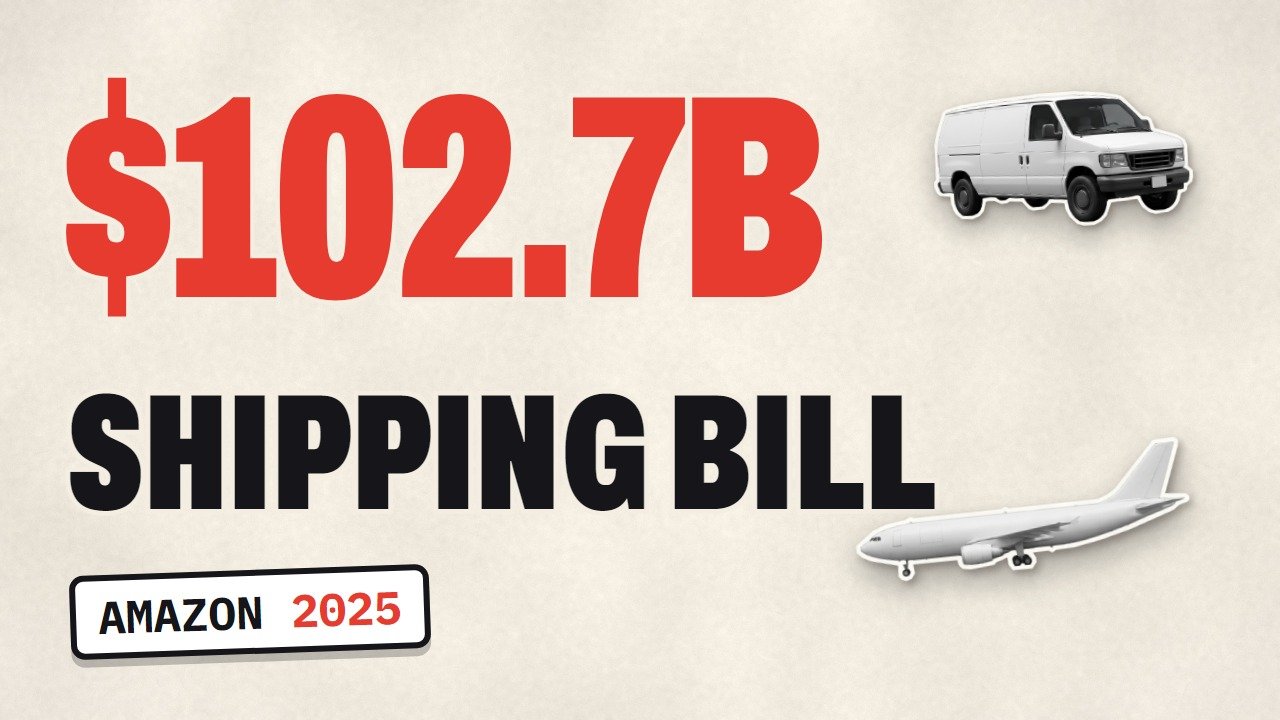
- Amazon's annual report for fiscal 2025 lists shipping costs of $102.7 billion, inbound and outbound. It does not say what free shipping costs on its own.3
- One 2006 study of a single online retailer found that free shipping above a minimum brought extra sales, and its authors judged those promotions unprofitable for that retailer. We read the abstract, not the full paper.6
00:00
Why are you $8 short of free shipping?
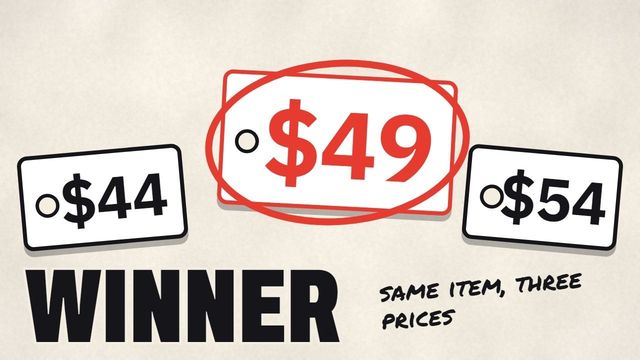
Picture a cart at $41. Free shipping starts at $49. You are $8 short, so you scroll for a phone case or a pack of batteries, anything that closes the gap. That $41 cart is a hypothetical example, not a real store.
Why does free shipping always have a minimum? The obvious answer is that the store wants you to spend more. That is part of the story, not all of it. The rest is a test, a bill and a study that found something awkward.
00:33
Did Amazon test its free-shipping minimum?
In January 2002, Amazon offered free Super Saver shipping on orders over $99. In June it lowered the bar to $49, and the press release calls that a test of three to six months.1
In August it lowered the bar again, to $25, citing "positive results" from the $49 test.2 That is $99, then $49, then $25 in a single year.
Amazon never published a number for those results, so we do not know what it measured. And there was a catch in the fine print: Super Saver was three to five days slower than standard shipping.2 Free had a price after all, paid in days.
A minimum is a dial. A company can test it, measure it and turn it.

Swipe sideways to read the full line.

Swipe sideways to read the full line.
01:34
How much does shipping cost Amazon?
Moving a box costs money. Amazon's annual report for 2025 lists shipping costs of $102.7 billion, up from $95.8 billion the year before.3
That counts boxes coming in and boxes going out, free or not. The report does not say what free shipping costs on its own. It does describe shipping offers as "effective worldwide marketing tools."3
Shipping was never free. It just moved off your receipt.
02:15
What did one study find about free shipping?
In 2006, Michael Lewis, Vishal Singh and Scott Fay published a study in the journal Marketing Science. It was not a lab test. It used data from an online retailer that had tried many different shipping-fee schedules.6
The abstract says customers were very sensitive to shipping charges. The fees changed whether people ordered at all and how big the order was. Free shipping, and free shipping above a minimum, both brought in extra sales.6
02:58
Can free shipping bring in sales and still lose money?
According to the abstract, the authors concluded that these promotions were unprofitable for that retailer. It lost shipping revenue, and some groups of customers did not respond at all.6 So a minimum can bring in sales and still lose money. For that retailer, it did.
Here is what we cannot tell you: how much extra people add to reach a minimum. We found no number we can trust, so we will not invent one. It is also one retailer, in a study from 2006, and we read the abstract only.
So why do stores keep the minimum? No document we found answers that outright. Our reading: free shipping brings in orders, every box has a bill, and the minimum is the line between the two. That is our reading, not a finding.
And the line moves in both directions. In February 2016, Money reported that Amazon raised its free-shipping minimum for non-Prime shoppers from $35 to $49, made "quietly, without any official announcement or press release."4
04:06
What happens at the checkout?
The Baymard Institute compiles surveys on why people abandon their carts. Among the reasons shoppers give, extra costs came first (shipping, taxes, fees), at 40%.5
That is what people say they did, not behavior anyone measured. But picture the checkout page: a new line appears and the total jumps. Free shipping removes that line, and the minimum decides who gets to skip it.

Swipe sideways to read the full line.
04:37
So why does free shipping have a minimum?
A minimum is where three things meet: what it costs to move the box, how big your order is, and what you decide. Amazon tested its minimum and moved it. Its shipping bill is enormous. One study found that shipping fees change how big an order gets.
What we have not seen is proof that it always pays off. In that one study, it did not.
Tomorrow, when your cart is a few dollars short, do one subtraction: what would shipping cost if you paid for it? If what you would add costs more than the shipping, and you did not want it, you are not saving on shipping. You are buying a product to unlock it. And check the delivery date: in 2002, the free option was the slow one.2
Back to the $41 cart. Somebody chose $49. A gap like that gets set by someone, and it can be moved.
Questions people ask
How slow was Amazon's Super Saver Shipping?
Amazon's August 2002 press release says Super Saver Shipping is three to five days slower than standard shipping. Free had a price after all, paid in days.2
Has the minimum for non-Prime shoppers ever gone up?
Yes. In February 2016, Money reported that Amazon raised the minimum for non-Prime shoppers from $35 to $49. Money wrote that the change was made quietly, with no official announcement or press release.4
Who wrote the 2006 study on shipping fees?
Michael Lewis, Vishal Singh and Scott Fay, in the journal Marketing Science. It used data from one online retailer that had tried many different shipping-fee schedules. We read the abstract, not the full paper.6
What should you do when your cart is a few dollars short?
Do one subtraction: what would shipping cost if you paid for it? If what you would add costs more than the shipping, and you did not want it, you are buying a product to unlock free shipping. Also check the delivery date. In 2002, the free option was the slow one.2
Sources
Every source we used, with its link. The numbers in the article point here.
- Amazon press release, June 2002Amazon.com, press release, June 18, 2002: free Super Saver Shipping threshold lowered from $99 to $49 as a long-term test
- Amazon press release, August 2002Amazon.com, press release, August 26, 2002: threshold lowered to $25 after "positive results"; Super Saver shipping is "three to five days slower than standard shipping"
- Amazon annual report, fiscal 2025Amazon.com, Inc., Form 10-K for fiscal year 2025 (filed Feb. 6, 2026): shipping costs of $95.8 billion (2024) and $102.7 billion (2025), inbound and outbound
- Amazon minimum, 2016 reportMoney, Feb. 2016: Amazon's free-shipping minimum for non-Prime shoppers rose from $35 to $49
- Cart abandonment surveysBaymard Institute, "Cart Abandonment Rate" (page updated Oct. 28, 2026): "Extra costs too high (shipping, tax, fees)," 40%; a compilation of surveys
- Shipping fee study, 2006Michael Lewis, Vishal Singh and Scott Fay, "An Empirical Study of the Impact of Nonlinear Shipping and Handling Fees on Purchase Incidence and Expenditure Decisions," Marketing Science 25(1), 2006 (abstract read via RePEc)Abstract on RePEc
What this does and does not show
- The 2006 study covers one online retailer, and we read its abstract, not the full article.
- The study does not say how much extra shoppers add to reach a minimum, and neither do we.
- "Why do stores keep the minimum?" is our reading, not a finding. The $41 cart is a hypothetical example, not a real store.
- The Baymard figure is self-reported survey data, not measured behavior. Amazon's annual report does not break out the cost of free shipping alone.
Credits
DEAL DECODED is an educational channel about the design behind prices, stores and brands. Nothing here is financial advice.
Voice and visuals are produced with AI tools; scripts are researched and fact-checked against the sources listed on this page.
Photo of Jeff Bezos, shown in black and white in the video: Seattle City Council, CC BY 2.0, via Wikimedia Commons.
Music: "Deep and Calm Downtempo Originality" by ComaStudio, "Dark Ambient Soundscape" by LemonMusicLab, "Minimal" by AtlasAudio (Pixabay Content License).